
Arp Odyssey
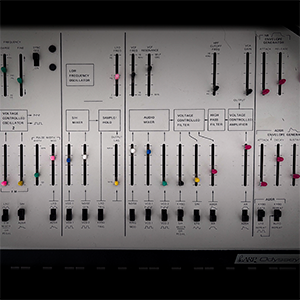
Like the Minimoog, the Arp Odyssey was the next step in a trend of miniaturisation and affordability that began with the big modulars and then birthed much more compact instruments. Unlike the Minimoog, the Odyssey has an extensive range of features including ring modulation, two types of envelopes, a sample and hold circuit, and two types of filters, and it manages to pack them all into a much smaller package. It's also noticeably more aggressive in tone, especially when amplified. The nerdy details: this is a "whiteface" original, the first edition from 1972 and released in much smaller numbers than subsequent versions. Like the Arp 2600, the Odyssey is now also available in reissue versions from Korg and Behringer, as well as in dozens of software synths.
Classic: Although the Minimoog is regarded as the classic monosynth these days, in the early 70s the Odyssey was probably more widely used. It's there in the lead from Roy Ayers' Everybody Loves The Sunshine, as well as the iconic bassline for Chameleon, from Herbie Hancock's Headhunters.
Contemporary: Sarah Davachi has used the Odyssey on most of her works from the last decade, which characteristically feature slowly-evolving drone textures. Intemporel, with Ariel Kalma, is one of the most minimal in terms of instrumentation, using just her Odyssey, Kalma's saxophone, and minor augmentation from other instruments. The Untuning of the Sky, from 2012, is maximal in instrumentation but even more minimal in texture.
Club: Irish duo Bicep used an Odyssey extensively in the series of EPs they released before their self-titled debut in 2017. In fact for the best part of a decade, Andy Ferguson and Matt McBriar used the Odyssey as one of a small set of vintage instruments, all of which offer relatively limited sound generation capabilities, to create the foundations of a style that's minimal but warm, recalling classic early 90s techno.