
Arp 2600
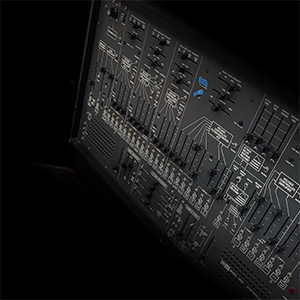
Like the Moog Modulars, the Arp 2600 aimed to make the elements of experimental electronic sound available in a package that could be afforded by working musicians — unlike its predecessor, the Arp 2500, which was marketed as the concert grand of synthesisers, with a price and size to match. Like the EMS Synthi AKS, it was also designed to teach those elements, with front panel legending that makes signal flow through its components clear and with internal speakers that allow it to be used without monitors or amps. The stroke of genius for the Arp's designers was to make it semi-modular: unlike the Moog Modular, it requires no patch cables to make sounds, but unlike the Minimoog it also allows its default connections to be overridden for more creative or experimental sound design. After decades during which it became increasingly difficult and expensive to source Arp 2600s, both Korg and German manufacturer Behringer reissued it in the mid 2010s. Both make excellent mini versions of the synth, but ours is the fullsize version, allowing for more flexible tactile control.
Classic: Minimalist composer Eliane Radique made the 2600's predecessor — the 2500 — the mainstay of her compositional technique from the 70s onwards, using it to create long, slowly-evolving pieces where the Arp's oscillators gently beat and thrum against each other — I'ile Re-sonante, from 2005, is a more recent example. Arp also provided most of the sounds of synth music in the early 70s, from jazz-fusion (Joe Zawinul used it extensively in his work with Weather Report) to funk and pop (the iconic lead in Kool and the Gang's Summer Madness was played on a 2600) and right through to 80s pop (for example, the bass sound on Michael Jackson's Thriller).
Contemporary: Caribou's Dan Snaith used a software emulation of the 2600 on Can't Do Without You, but switched to the real thing for Suddenly, his most recent release, borrowing one from Sam Shepherd of Floating Points.
Club: To justify the expense of acquiring a vintage Arp 2600, Terje Olsen challenged himself to produce a record using it alone. The result was Inspector Norse, where everything — drums, bass, melodies, sound effects — was created on the 2600. Like Alessandro Cortini with the EMS Synthi or Suzanne Ciani with the Buchla 200, the idiosyncratic nature of the results demonstrates that though an instrument may shape sounds, it's the artist who makes those sounds into music.